Reacting to Responding: I Thought Reacting Was Normal
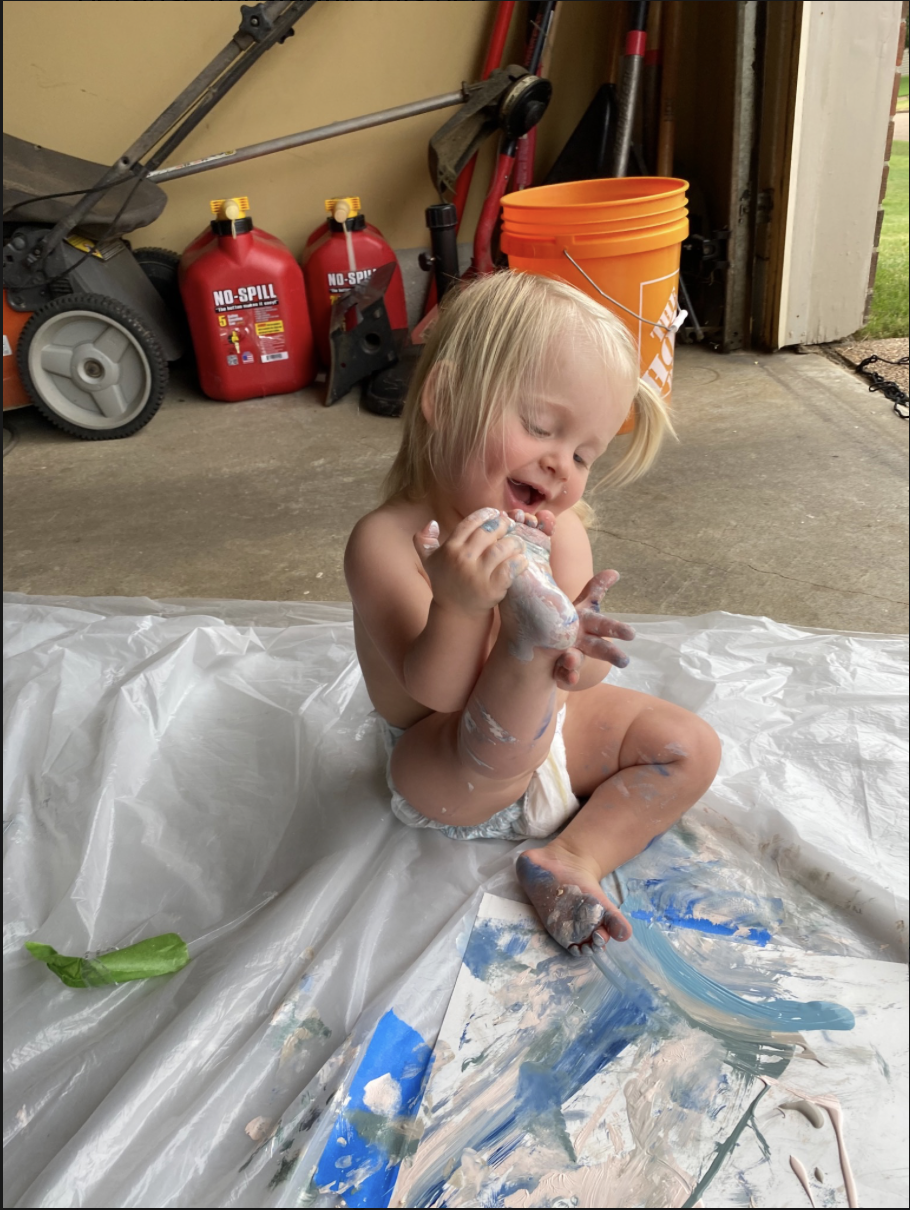
I Thought Living in Chaos and Overwhelm Was Normal
I thought that living in chaos and overwhelm was normal. It was the way we operated, the speed we went as a family.
My mom is an incredible mom, and I love her deeply. She also had big energy, and she said yes to a lot of things before checking in with herself. For me - it led to a lot of fast, big, hurry, rush—like a bouncy ball going everywhere or an Energizer bunny just going all the time. I know now that is not my speed and I commend her for spark, her light and energy. I benefited from it and had such a full childhood.
It also came with some collateral consequences - when my humanness showed up, which it does. My mom was already at capacity with her full schedule. So when I spilled something, she would react. If I forgot something at home, she would react.
It wasn’t necessarily intentional—she just reacted.
And I think reaction comes from dysregulation. From overwhelm. From chaos.
The Way I Learned to Mother
So I operated in that way for a while in early motherhood more so after the birth of my second daughter.
She received more of it. I was in a more dysregulated place emotionally and energetically, and I didn’t have a lot of capacity. So in her early toddler years, I responded the same way I knew how:
“Why did you do that?”
“How did you spill it?”
It was very reactionary. I was unintentionally spilling out shame.
And I have so much compassion for myself, and I’m grateful for the ability to repair. I saw the impact, and I was aware enough to begin asking—
How do I get out of chaos and overwhelm and into regulation and into calm?
I Didn’t Know There Was Another Way
I didn’t even know calm as a way of being was possible.
I didn’t even know play was possible.
I didn’t even know there was a different way of being.
But there is a different way.
You can respond through play and through creativity.
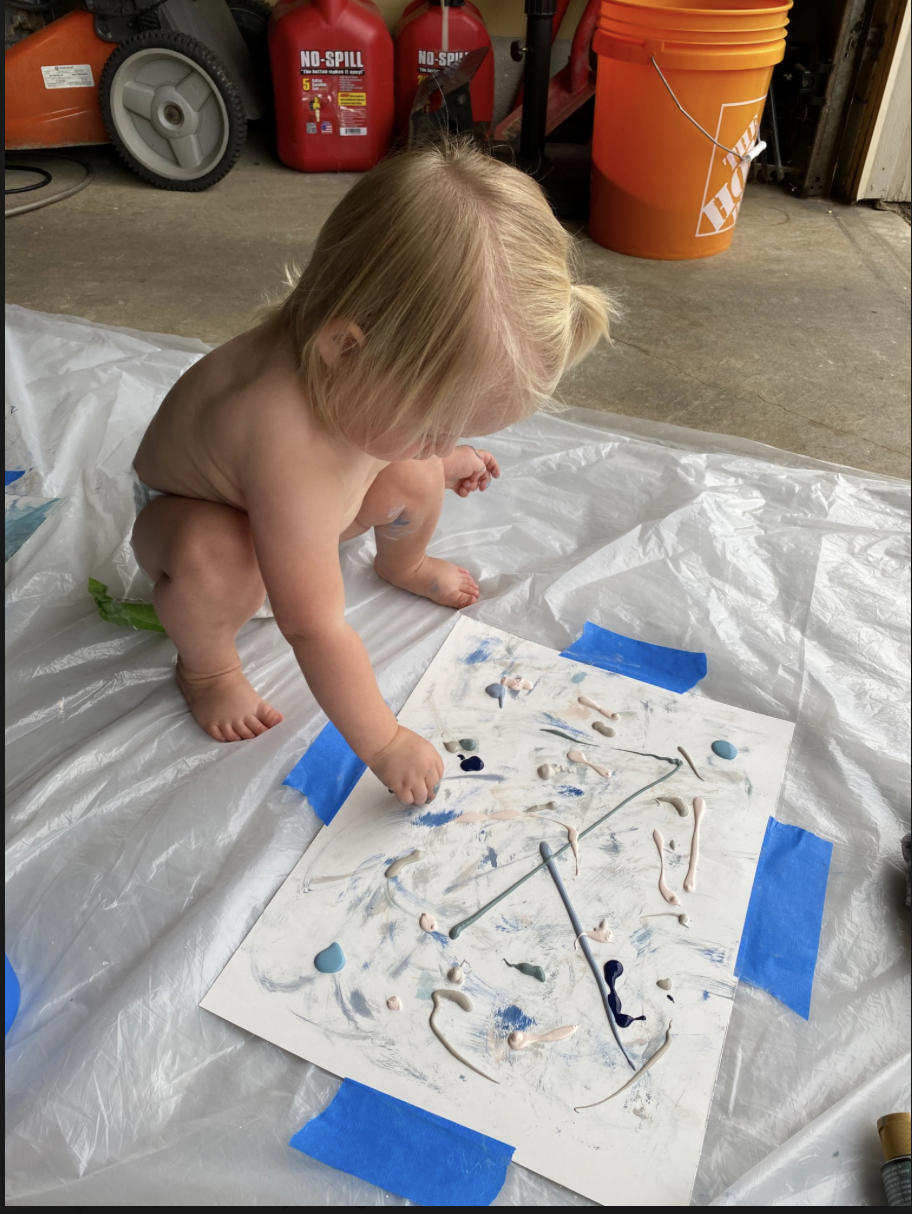
The Moment Everything Shifted
I remember one time we had just gotten back from Starbucks. I promised them a pink drink, and it spilled—in between the stove and the counter, in that little crevice, and all on the floor.
And you could tell she had a bit of fear, like, “What’s going to happen?”
And I said,
“Emily, I did not know the floor was so thirsty. It wanted some of that pink drink too.”
And she just softened and laughed.
And I said,
“I know. But the floor can’t drink it all, so we’re going to have to help it.”
And we cleaned it up together.
It was so simple.
Reframing the “Mess”
Another time, one of my kids wrote on the wall, probably the floor too, on the same day, with a marker—washable or not was to be determined.
And I said,
“Wow, somebody autographed our wall. How special that our wall is marked by an artist.”
And then I said,
“But art is supposed to hang. I wonder how we can get it on paper so we can clean this up and hang your art.”
And we cleaned it up together.
What They Learn From Us
I used to say all the time,
“No big deal. We can clean it up.”
“No big deal. We can buy a new one.”
If something broke or a mistake was made.
And one time, one of my kids marked the couch, and I raised my voice.
And my oldest said,
“No big deal. We can clean it up.”
And I paused and said,
“You’re right. No big deal.”
Their Inner Voice Is Built Here
What’s so beautiful is that our response becomes how they talk to themselves.
Now when things happen, they laugh and say,
“Mom, the floor was thirsty.”
And I’m like, “Oh my gosh.”
And then it’s,
“Looks like it can’t finish it, so let’s help clean it up.”
Even when they spill their food, it’s like,
“Oh my, the floor was so hungry. Who knew it needed that much?”
Just creating play, perspective, lightheartedness.
They Are Not the Mistake
And this is the power of moving from reaction to responding.
It creates softness with our kids and within ourselves.
It offers compassion.
And it reframes how they see themselves—
Not as the accident.
Not as the mistake.
Not as the error.
But as human.
Where mistakes are part of learning.
My daughter was knitting a blanket and had to start over three times. And she said,
“It took mistakes in order to learn how to do this. Those mistakes made me a master at this.”
And how beautiful is that.
Where This Really Comes From
And I recognize now where the dysregulation came from.
I felt very isolated for a number of reasons.
I was unsupported in that season.
I was not resourced in community or within myself for what was showing up and spilling out.
And that’s a whole deeper journey—
how do you resource yourself,
how do you build the village you always dreamed of and desired that will support you, will allow you to be held and witnessed. That will pull out the fun create opportunities to play which opens up so much possibilities.
From Reaction to Response
There is so much magic in moving from reaction to responding.
It creates softness.
It creates compassion.
It creates connection.
It creates silliness.
It creates a different experience for our children and for ourselves.
Ready to Shift
If this resonates, and you want to learn how to go from reaction to responding and find the reframe, connect with me here or send me an email.
You can send me an example of what happened, and I can help you find the reframe through play, lightheartedness, and possibility.
And if you want to go deeper, beyond the reframe and into regulation, that’s something I support in my one-on-one work.
You can move from chaos to calm.
From reaction to response.
It’s possible.
I’m cheering you on. Sending you so much love.
